Dissent Summer 2026
Patrick Iber opened up this issue in an almost prophetic way with the editor's opening:
The semiquincentennial celebrations planned by the White House will not be a demonstration of unity. They will celebrate the domination of one part of the country over the other. Donald Trump’s 250th will be a carnival, complete with a barker-in-chief, attempting to sell the idea that the United States is winning like never before. Outside of MAGA-land, there will not be so much celebrating. It is hard to cheer when Trump will insist that the festivities are made into a reflection of his glory.
This section was immediately highlighted because it couldn't have been phrased any better. I do wish that the lawsuit to stop the event from happening landed but relying on the legal system to enforce any sort of justice is like asking CitiBank nicely to return the money they stole from the Haitian National Bank — a joke all around. I disagree with quite a bit of what Iber continues on to say because it clings to this idea that we can just refactor the "bad parts" of the American project and lean on "small-d democratic control, not big-D Democratic control" to fix the ailments of this project. The first essay after the note operates like a palette cleanser because it's way more honest and direct about the place that the United States has in its evolution as a global power that's attempting to drag the rest of the world down with it.
The American Revolution in Global Retreat
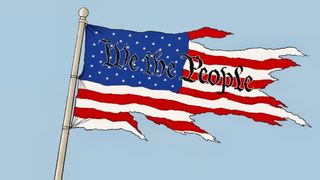
In his 1949 speech to the U.S. Congress two years after Indian independence, Prime Minister Jawaharlal Nehru called the American founders the “torchbearers of freedom, not only for this country but for the world.” Indonesian President Sukarno opened the famed 1955 Bandung Conference of Asian and African states by highlighting the anniversary of Paul Revere’s midnight ride, which informed settler militias of advancing British forces prior to the battles of Lexington and Concord. Sukarno declared the Third World’s anticolonial struggle to be the culmination of a “battle which began 180 years ago” with “the American War of Independence, the first successful anti-colonial war in history.”
During the twentieth century, U.S. independence became a symbolic touchstone for many communities in the Global South that would have been excluded from that revolt. It stood for the idea that all people have the right to govern themselves and to fundamentally change the conditions of their own societies. For all the flaws of the American Century, its great attraction was the degree to which economic, political, and cultural life seemed to exist in a dynamic relationship with the will of its changing people. Above all, it was this relationship that gave world-historical significance to the events of 1776 for outsiders. Rather than a local political conflict unleashed by restive settlers, the long-term engine of American renewal meant that an eighteenth-century spark could be linked to an unfolding global story of human freedom.
The focus it brought to the global conversation: that the American Revolution was the grandest and most noteworthy is refuted by C.L.R James, as mentioned in this piece. If the mission of independence, of freedom - as described by Thomas Jefferson and F.W. Reitz - is tied to one's authority to "exterminate the brutes" and invoke "manifest day", it makes sense why then the ceiling of political understanding that Black capitalist and celebrities have are that of house Negro-esque ideas: staying as close to whiteness and mimicing its talking points (despite the cementing in history of cultural production it might have brought - the cost is intellectual and communal damage for the profit of a few):
The State Department may have sponsored jazz tours, but in the era of Coltrane such art often remained inflected with global anticolonial solidarity in ways that challenged any easy Cold War purpose. These oppositional connections certainly did not disappear, but by the twenty-first-century age of Black billionaires like Jay-Z and Oprah, commercial creativity seemed to fit far more comfortably with both American capital and power.
I'm still working my way through this issue but best believe I'll be following up; it's been full of bangers so far.